If you’ve been told you have a slab leak, the first thing you probably want to know is how much does slab leak repair cost
The honest answer is that there isn’t one price for every slab leak. A typical repair can range from around $1,200 to $4,500, but some jobs cost less and more complicated repairs can go well beyond that. We know this is a big range, but no two leaks are exactly alike.
Leak detection is usually a separate cost and average cost is roughly $150 to $600, depending on the type of testing needed.
If you’re in Camarillo or Ventura County and think you have a slab leak, the best way to get an accurate number is to have the leak located first. Once we know where the problem is and what condition the pipe is in, we can tell you what needs to be done and more precise slab water leak repair cost.
What Determines the Cost of Slab Leak Repair?
Two homes can have what sounds like the same plumbing problem and end up with very different repair bills. That’s because the leak itself is only part of the job.
Here are some of the things that can change the cost.
Where the Leak Is Located
A pipe leaking in an easy-to-reach area is one thing. A pipe buried underneath a finished floor, kitchen, bathroom or other difficult area is another.
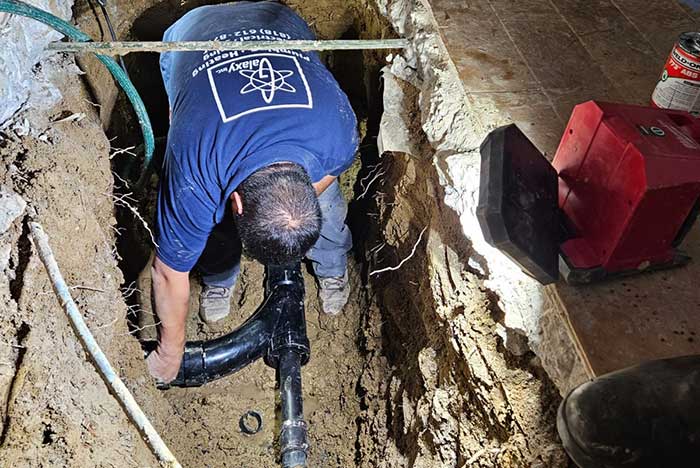
With a direct repair, someone has to get to the pipe before it can be fixed. That can mean cutting through the concrete slab and then dealing with whatever is on top of it.
This is one reason accurate leak detection matters. You don’t want to start breaking concrete until you have a good idea where the leak is.
Hot Water Line or Cold Water Line
Slab leaks can happen on either hot or cold water lines. Hot water lines can be more prone to corrosion and damage over time, especially in older plumbing systems, so hot water slab leak repair cost is usually higher..
The type of line involved can also affect which repair makes the most sense. Sometimes repairing the section of pipe is the right answer. Other times, rerouting the line is better.
The Repair Method
There are several ways to deal with a slab leak. We may recommend a direct spot repair, rerouting the affected line, pipe lining or, in some cases, replacing more of the plumbing.
The cheapest option isn’t automatically the best one. If the rest of the plumbing is old and you’re already seeing multiple leaks, spending money on one repair after another may not be the smartest solution.
Flooring and Access
The pipe may be the actual problem, but getting to it can be a big part of the job.
If the leak is underneath tile, wood flooring or another finished surface, some of that material may need to be removed. Concrete may also need to be opened to reach the pipe.
The plumbing repair and the restoration work aren’t always the same thing, so ask what is included in the estimate before work starts.
Pipe Material and Age
The age and condition of your plumbing matter too.
A single leak in otherwise good plumbing is a different situation from a home with old pipes that have already developed several leaks. If the plumbing is deteriorating throughout the house, a larger replacement is more reasonable than continuing to repair individual leaks.
Slab Leak Repair Cost by Repair Method
There are a few different ways a slab leak can be repaired. The right one depends on the location of the leak, the condition of the pipe and the layout of the home.
Direct Spot Repair Through the Slab
A spot repair means opening the slab at the leak, exposing the damaged pipe and repairing or replacing that section.
This can be a good option when there is one isolated leak and the rest of the plumbing is in decent shape.
The upside is that you’re fixing the problem right where it happened. The downside is that you’re opening the slab and may have additional concrete or flooring work afterward.
For more information about the actual service, you can find out more at our slab leak repair service page.
Pipe Rerouting
Instead of opening the slab, a plumber may be able to abandon the leaking section and run a new water line through a different route.
This is often called a reroute or bypass. It can avoid cutting into the slab and may be a better choice when the existing underground line is old or when the leak is in a difficult location.
General estimates for a slab leak reroute are often around $1,500 to $4,500, but the layout of the house can make a big difference.
Epoxy Pipe Lining
Pipe lining involves putting a coating inside the existing pipe to seal and reinforce it from the inside.
It can be useful in the right situation, particularly when the pipe is still structurally sound but has developed smaller leaks or corrosion. It isn’t the right solution for every pipe or every slab leak.
Costs vary quite a bit based on the pipe, how much of it needs to be lined and how accessible the system is. That’s why this isn’t something that can be priced accurately just by looking at the type of leak.
Partial or Whole House Repiping
Sometimes a slab leak is a sign of a larger plumbing problem.
If an older home has already had several leaks, fixing one section may only solve today’s problem. Other sections of the plumbing may be in similar condition.
That’s when a partial repipe or whole-house repipe may be worth discussing. In our experience, home repipes and whole-house repiping makes more sense when replacing larger sections of an aging plumbing system than continuing with individual pipe repair.
How Much Does Slab Leak Detection Cost
Before anyone starts cutting into your floor, you need to know where the leak actually is.
That’s what slab leak detection is for.
Professional leak detection can use electronic listening equipment, pressure testing and other diagnostic methods to narrow down the hidden leak location. Pallan Plumbing also uses thermal imaging and other leak detection tools for hidden plumbing problems.
Professional leak detection is around $150 to $600, although the price depends on the type and complexity of the job.
It may seem like another expense, but finding the leak before opening the slab can save you from unnecessary demolition. You don’t want someone guessing where the pipe is and then finding out they opened the floor in the wrong spot.
If you aren’t sure whether the problem is actually under your slab, our plumbing leak detection service can help locate hidden leaks before the repair starts.
What Other Costs Can Come With a Slab Leak
The plumbing repair isn’t always the only expense.
Flooring and Concrete Repairs
If the slab needs to be opened, the concrete will need to be patched after the plumbing work is finished.
Depending on the location, you may also need to repair or replace flooring. Tile can be particularly difficult if you don’t have spare matching pieces. Ask about this before work begins so you know which parts of the job your plumbing estimate covers and which parts may need another contractor.
Water Damage
A leak that has been running for a while can cause damage beyond the pipe itself.
Water can get into flooring, walls and other materials around the leak. The longer the water is allowed to run, the more likely it is that the repair becomes more than just a plumbing job.
Mold Remediation
Mold isn’t guaranteed to happen with every slab leak. But if moisture has been sitting in or around the home for a long time, mold can become another problem that needs to be dealt with.
That is one more reason not to ignore a leak because the first signs don’t seem serious.
A Higher Water Bill
Sometimes the first clue is the water bill.
If your water use suddenly goes up even though your habits haven’t changed, there may be a leak somewhere in the plumbing. A slab leak is one possibility, although toilets, fixtures and other plumbing problems can cause the same thing.
If the water meter is moving when everything in the house is turned off, that’s worth checking out.
Does Homeowners Insurance Cover Slab Leaks
This is one of those questions where you need to look at your own policy.
Homeowners insurance may treat the damaged plumbing itself differently from water damage caused by the leak. Coverage can also depend on why the leak happened and what your particular policy excludes.
Don’t assume that a slab leak is automatically covered or automatically excluded.
If you think you have a claim, contact your insurance company and ask what your policy covers before authorizing major restoration work.
Signs You May Have a Slab Leak
A slab leak doesn’t always leave a big puddle on the floor. Sometimes the signs are easy to miss.
You may notice:
- A water bill that suddenly goes up
- The sound of running water when everything is turned off
- Warm spots on the floor
- Damp or wet areas that keep coming back
- Cracked flooring or other unexplained changes
- Lower water pressure
- Musty smells or signs of moisture
Hot spots on the floor can point to a hot water line leaking underneath. A cold water leak may be harder to notice until you see moisture or another change around the floor.
If you want to learn more about what causes these leaks and what signs to watch for, read our article on What Causes a Slab Leak?.
Why Fixing a Slab Leak Quickly Can Save Money
Nobody wants to spend money on a plumbing repair before they absolutely have to. That’s understandable. But a slab leak isn’t a good problem to put off.
The longer water keeps escaping, the more water you’re paying for. You also increase the chance of damage to flooring, walls or other parts of the home.
And if the plumbing itself is already in poor condition, waiting can give you more than one leak to deal with.
You don’t have to panic over every small plumbing problem. But if you have a strong reason to believe you have a slab leak, it’s worth finding out what’s happening sooner rather than later.
A good first step is simply locating the leak and finding out what you’re dealing with. After that, we will tell you how much does it cost to fix a slab leak.
Frequently Asked Questions About Slab Leak Repair Cost
Does a slab leak mean I need to replace all my pipes?
No. One slab leak does not automatically mean you need a whole-house repipe. If the rest of the plumbing is in good condition, repairing one section may be all that’s needed.
How long does slab leak repair take?
It depends on the repair method and what the plumber finds once the leak is located. A straightforward repair can be completed relatively quickly, while a reroute, repipe or job involving extensive concrete and flooring work take longer.
Can a slab leak cause my water pressure to drop?
Yes, a slab leak can cause lower water pressure, especially if the leak is large enough to divert a noticeable amount of water from the plumbing system.
Can a slab leak affect my home’s foundation?
A slab leak can cause problems around the foundation if water continues escaping beneath or around the concrete. Saturated soil can shift and ongoing moisture can create other issues around the slab. A leak does not necessarily imply your foundation has been damaged, but it should not be ignored.
Can a slab leak cause cracks in my walls or ceilings?
It can, although a crack by itself does not mean you have a slab leak. Water escaping beneath the home can contribute to changes in the soil or movement around the structure. If new cracks appear along with other signs of a leak, it is worth having the plumbing inspected.
Can a slab leak happen in a newer home?
Yes, a newer home can still develop a slab leak. Installation problems, damaged pipes, shifting materials or defects can cause a leak even when the plumbing isn’t very old. Age is one factor, but it isn’t the only reason a pipe can fail.
How long can a slab leak go unnoticed?
A slab leak can go unnoticed for weeks, months or sometimes longer if the signs are subtle. A slow leak may not create obvious standing water, especially when the plumbing is buried under concrete.
Can a slab leak cause my water heater to run more often?
Yes, a hot water slab leak can make your water heater run more often because hot water is continually leaving the system.
Can I still use my plumbing if I suspect a slab leak?
You may be able to use the plumbing, but continued use can keep water flowing through the leaking line. If you have a strong reason to believe there is an active leak, limiting water use until the problem is checked can reduce additional water loss.
Can a slab leak cause electrical problems?
It can create an electrical safety concern if leaking water reaches electrical wiring, outlets or other components. Water and electricity are a dangerous combination, so visible water near electrical equipment should be treated seriously.
Get Slab Leak Detection and Repair in Camarillo and Ventura County
If you think you have a slab leak, you don’t need to guess at what’s happening under your floor.
Pallan Plumbing can locate hidden plumbing leaks and discuss the repair options based on what we actually find. We provide emergency plumbing services in Camarillo and communities throughout Ventura County.
If you’re seeing signs of a slab leak or just want to find out what’s going on, contact Pallan Plumbing to schedule an inspection and get an estimate for the work.