Most homeowners don’t think about their plumbing system until something goes wrong. Knowing when to replace plumbing before a pipe bursts or a fixture fails can save thousands in water damage and emergency repairs.
How Long Do Plumbing Pipes Last?
The lifespan of your plumbing pipe depends on what they’re made of and what’s flowing through them. Published estimates assume ideal conditions, but real-world factors can cut a pipe’s useful life in half.
Based on what they’re made of, the pipes can last an average of:
| Pipe Material | Expected Lifespan |
| Copper pipes | 50 to 70 years |
| Brass pipes | 40 to 70 years |
| Cast iron pipes | 75 to 100 years |
| Galvanized steel pipes | 20 to 50 years |
| PVC pipes | 25 to 40 years |
| PEX pipes | 40+ years |
Why Your Pipes (May) Fail Earlier Than Expected
Water quality is the biggest factor that shortens pipe lifespan. Hard water deposits minerals inside pipe walls, gradually narrowing water flow and building pressure. Acidic water attacks copper from the inside, creating pinhole leaks in pipes less than 20 years old. High chlorine in municipal water supply systems accelerates degradation further.
Unexplained spikes on your water bill can signal a hidden leak before visible symptoms appear. A water quality test reveals whether corroding pipes are failing because of your plumbing or your municipal supply, making it one of the smartest diagnostic steps a homeowner can take.
Warning Signs You Need to Replace Your Plumbing
Pipe age gives you a general timeline, but day-to-day symptoms are far better indicators that replacement is due.
Discolored or Foul-Smelling Water
Brown or rust-colored water from your taps means pipe corrosion has progressed enough for particles to flake into your water supply. If the discolored water appears at multiple plumbing fixtures rather than one faucet, the problem is systemic. Foul-smelling water suggests bacterial growth inside deteriorating pipes and advanced interior degradation. One way to at least prevent this from harming your health until the pipes get fixed is to get a ERO 175 EcoWater water filter or something similar so that your drinking water is as clean as possible.
Low Water Pressure Across Multiple Fixtures
Low water pressure throughout your entire home is very different from a single slow faucet. Corrosion inside old pipes narrows the internal diameter and restricts water flow. If drain cleaning and aerator replacements haven’t helped, the pipes themselves are likely the problem.
Frequent Leaks and Recurring Clogs
One leak is a repair. Frequent leaks in different areas point to a plumbing system failing broadly. Recurring clogs that return despite repeated drain cleaning follow the same pattern. Corroded pipes develop rough interior surfaces that catch debris far more easily than healthy ones, and ignoring these plumbing problems risks serious water damage.
Visible Corrosion or Wet Spots
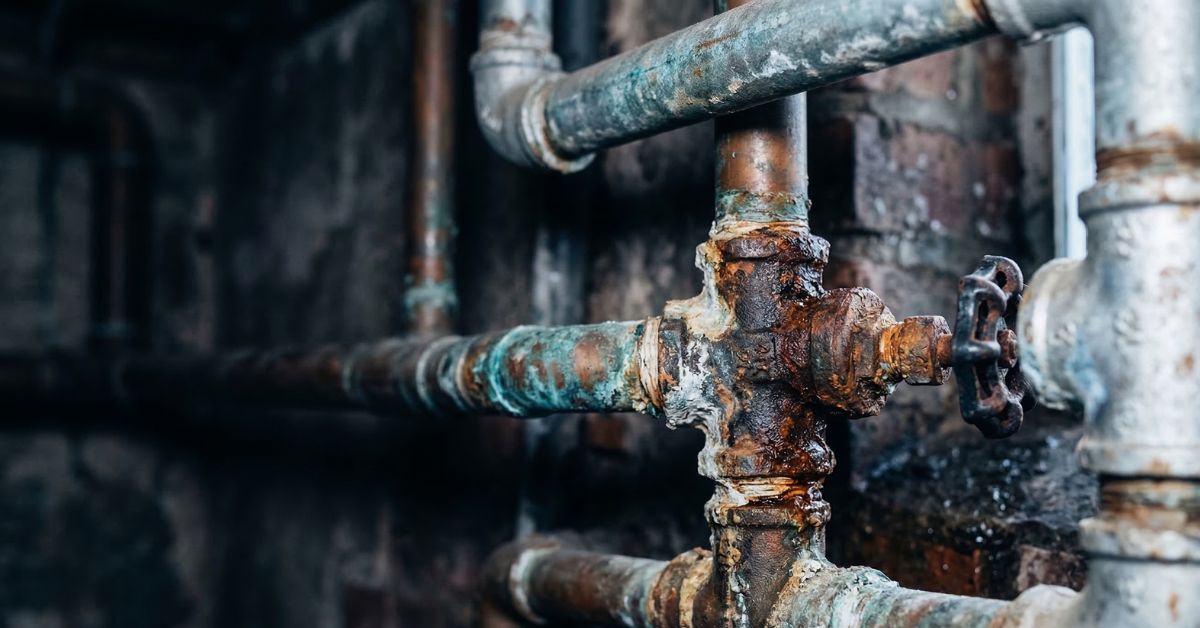
Check exposed pipes in your basement or crawl space for green discoloration on copper, rust on iron pipes, or white deposits at joints. Wet spots or staining on walls and ceilings often indicate slab leaks from deteriorating pipes behind the drywall.
Pipe Materials That Should Be Replaced Immediately
Some pipe materials are hazardous regardless of visible symptoms. If your home has any of the following, proactive pipe replacement is the right call.
Lead Pipes
Lead pipes were common in homes built before the 1930s and leach lead directly into your water supply pipes. There is no safe level of lead exposure. A professional plumber can confirm their presence and recommend a replacement plan.
Polybutylene Pipes
Homes built between 1978 and 1995 may have polybutylene supply lines, a pipe material that became the subject of a major class-action lawsuit due to its tendency to crack without warning. Some insurance companies won’t cover homes with polybutylene. Replacement with modern PEX pipes is the standard fix.
Galvanized Steel Pipes
Galvanized steel pipes rely on a zinc coating to resist corrosion, but that coating degrades over time. As it breaks down, the steel corrodes rapidly and can release contaminants into the water. In hard water areas, galvanized steel pipes often fail well before the 50-year mark.
Should You Repair or Replace Your Plumbing?
This is the decision most homeowners actually wrestle with. Accessibility is the single biggest cost driver in a full replacement, which is why labor drops dramatically when walls are already open during a renovation.
When Repairs Make Sense
If your plumbing pipes are relatively new and the issue is limited to a single fixture or section, a targeted repair from a qualified plumbing service is the right move. Isolated clogs, a single leaky joint, or a failing faucet cartridge are routine maintenance situations where a professional plumber can fix the problem without touching the broader system.
When Full Replacement Is the Better Investment
Recurring problems across multiple areas, risky pipe materials, or a system that has reached the end of its expected lifespan all point toward full replacement. The plumbing tips that experienced homeowners share consistently confirm this pattern. Investing in new pipes costs less over time than a cycle of escalating repairs on aging pipes.
When to Replace Plumbing Fixtures
Pipes get most of the attention, but your plumbing fixtures have their own replacement timelines worth tracking.
Water Heaters, Toilets, and Faucets
A traditional tank water heater lasts 10 to 15 years, while tankless models can go 20. Toilet flappers and fill valves wear out every 5 to 10 years. Faucets can often be repaired multiple times, though constant fixes eventually make replacement the smarter choice.
Washing Machine Hoses and Garbage Disposals
Washing machine supply hoses are one of the most common sources of sudden water damage. Most manufacturers recommend replacing them every three years. Garbage disposals last about 10 years before motor wear and frequent clogging signal replacement is due.
What to Replace Your Pipes With
Choosing the right replacement material determines how long your new plumbing lasts and how much the project costs.
PEX vs. Copper for Supply Lines
PEX pipes have become the default for residential repiping. They resist corrosion entirely, won’t develop pinhole leaks, cost less than copper in materials and labor, and handle freezing better by expanding rather than cracking. Copper remains solid for homeowners who want a proven track record, but the cost difference is substantial. Most professional plumbers now recommend PEX-A for whole-home repiping of water supply pipes.
Trenchless Options for Sewer Lines
Trenchless methods like pipe bursting and pipe lining replace sewer pipes with minimal excavation. Pipe bursting pulls a new pipe through the old one while breaking the original apart. Pipe lining creates a new pipe inside the existing one using epoxy. Both reduce disruption and cost dramatically compared to traditional dig-and-replace, though they require a plumbing service with specialized equipment.
Protect Your Home, Call Us!
Waiting for a pipe to burst or a fixture to fail always costs more than acting early. Whether you’re seeing warning signs or just want a professional assessment of your plumbing system’s condition, getting ahead of the problem is the smartest move. Contact us today to schedule an inspection and find out exactly where your home stands.