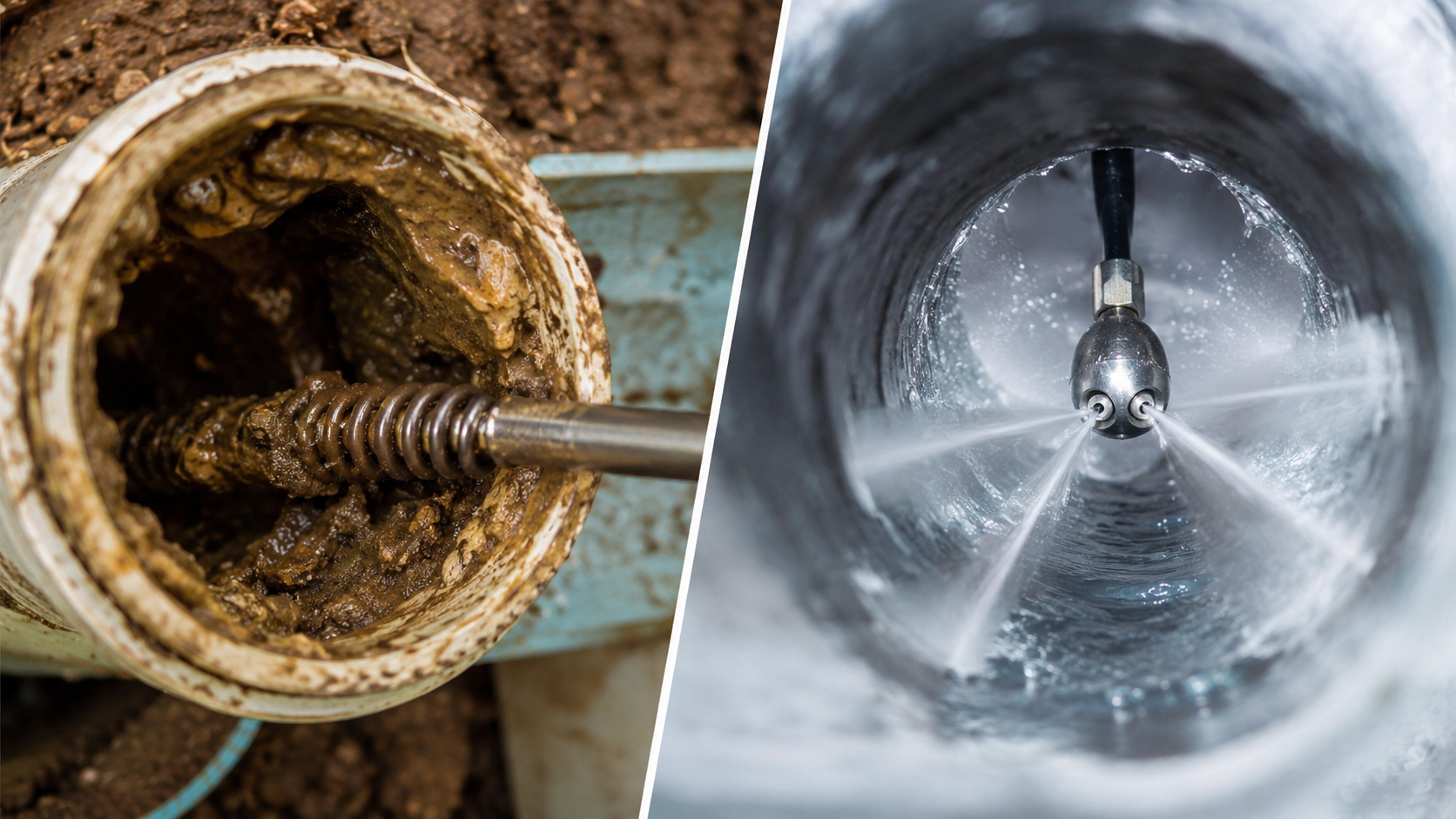
Drain cleaning and hydro jetting both clear a clogged drain, but they don’t do the same job. Traditional drain cleaning is the broad term for clearing a blockage, run with a cable or rooter machine that pushes through whatever is stuck. Hydro jetting blasts the whole pipe wall clean with high pressure water. Drain cleaning gets water moving again. Hydro jetting scours the buildup off the full pipe wall. Which drain cleaning method your line needs depends on what’s clogging it, how old your pipes are, and how many times you’ve had this same backup. Here’s how to tell them apart and choose right.
What’s the Difference Between Drain Cleaning vs Hydro Jetting?
Drain cleaning is the umbrella term for any method that clears a blocked drain pipe. Most jobs mean a plumber running a steel cable, also called a snake or auger, down the line to break through whatever is stuck. That cable work is what people mean by traditional drain cleaning. Hydro jetting is one specific method inside that category. It uses pressurized water to cut through the clog and scrub the pipe walls clean at the same time.
What separates them is what each one leaves behind. A cable bores a hole through the blockage and gets water flowing, but the grease, scale, and gunk coating the pipe stay put. Traditional drain cleaning methods reach the clog without touching that buildup. Hydro jetting strips it off, so the pipe is back near its original diameter when the job is done.
So when someone weighs drain cleaning against hydro jetting, they’re comparing a traditional drain cleaning service against water jetting. That’s the comparison this article runs with.
How Drain Cleaning Works
Traditional drain cleaning covers a handful of mechanical tools, and the right drain cleaning method depends on the clog. A bathroom sink full of hair and a main sewer line full of roots call for different equipment, even though both fall under the same service.
Drain Snakes and Augers
Drain snaking is the most common form of traditional drain cleaning. A drain snake is a flexible steel cable with a corkscrew or blade tip. The plumber feeds it down the drain until it reaches the clog, then spins it to break the blockage apart or hook it and drag it out. A hand auger handles a sink or tub. A motorized drum machine drives a longer, heavier cable through a sewer line. Snaking does well on soft clogs, hair, and single fixtures, where the blockage sits in one spot and the cable can reach it. Its limit is that it bores through the clog without cleaning the pipe walls. Professional drain snaking matches the cable and head to the line, which protects the pipe on the way through.
Rooter Machines and Cutting Heads
A rooter is a heavier motorized cable fitted with cutting heads, built for sewer lines and tree roots. The name comes from root-cutting. As the cable spins, the blades shear off roots that have grown in through pipe joints and reopen the line. A rooter clears the clogged drains sitting in the pipe today, though roots grow back and the walls stay coated, so it’s a fix with a clock on it.
Why Chemical Drain Cleaners Make Things Worse
Skip the bottle of chemical drain cleaner under the sink. It clears clogs by generating heat, and that same heat and caustic chemistry goes to work on your plumbing system, your seals, and the trap. On older metal or thin plastic, repeated use thins the drain pipe from the inside out. And when the cleaner doesn’t fully clear the blockage, you’re left with a pipe full of caustic water that the next plumber has to drain by hand. A plunger or a proper cable does the same job without eating your plumbing.
How Hydro Jetting Works
Hydro jetting trades the steel cable for water. A hydro jet feeds a hose down the line, and a nozzle releases water at enough pressure to cut through the blockage and scrub the pipe at once.
The Water Pressure and Nozzles
A jetter runs water at roughly 1,500 to 4,000 PSI, with the exact number set by the pipe and the clog. The nozzle does the cutting and scrubbing. Forward-facing jets break through whatever is blocking the line, while rear-facing jets drive the hose forward and scour the walls behind it, flushing the loosened debris downstream. Plumbers swap nozzles for the job, one head built for slicing grease, another for cutting roots, another sized to a wider sewer pipe.
What Jetting Clears That a Snake Leaves Behind
Grease is where the gap shows most. A cable punches a channel through a grease clog and water drains again, but the grease ringing the pipe is still there, narrowing the line and catching the next thing that washes down. Water jetting strips that ring off. The same goes for the hard scale that Ventura County’s water leaves inside pipes and the sludge that settles along the bottom of a sewer line. Once the pipe walls come clean, the line carries its full volume again. That kind of thorough cleaning is beyond a snake, because high pressure water reaches the full circumference of the pipe.
Which Method You Need
Four things decide which drain cleaning method your line needs. What’s clogging it, where the clog sits, how many times it’s happened, and whether it’s a home or a busy commercial kitchen. Getting the cleaning method right the first time saves you a second service call.
Match the Method to the Clog
Soft blockages point to a cable. Hair, food scraps, a toy flushed by a toddler, a single object stuck in a trap, all of it clears with a snake. Grease, mineral scale, packed sludge, and heavy root growth point to water jetting, because these coat or fill the whole pipe while a cable only bores through the middle. Run a snake through a grease clog and you’ve bought a few weeks before it closes back up.
A Single Slow Drain or the Whole Line
One slow drain is a localized problem. A single sink, tub, or toilet draining slow while everything else runs fine means the clog sits in that fixture’s branch, and a cable reaches it without trouble. When several fixtures back up together, or the lowest drain in the house gurgles and floods, the blockage is in the main sewer line. That points to hydro jetting, and a sewer camera inspection confirms where it is. Recurring sewer backups almost always trace to the main line, not a single fixture.
A First Clog or the Fourth This Year
How many times the same drain clogs tells you more than anything else. A first-time backup on a line that’s run clean for years is a cable job. A clogged drain you’ve had snaked twice already this year is telling you the cable isn’t reaching the cause. The buildup is on the pipe walls, out of a snake’s range, and hydro jetting is what clears it.
Homes and Commercial Kitchens
A commercial kitchen is a hydro jetting account from day one. The volume of grease and oil going down those drains coats a line fast, and a cable can’t keep pace, which is why restaurants put their lines on a jetting schedule. Home drains don’t see that grease load, so residential plumbing leans on cable work and turns to hydro jetting when a clog recurs or a sewer line packs up. Pallan handles both sides through its commercial plumbing services and residential plumbing repair.
Why a Camera Inspection Comes First
Before a jetter touches the line, a camera goes down it. A waterproof video scope shows the plumber what’s causing the clog, how far down it sits, and the pipe condition itself, which is the part that keeps hydro jetting safe. Sending high pressure water into a pipe nobody has looked at is how cracked or corroded lines get blown open.
The camera rules that out. It also catches the bigger problems a jetter can’t fix, a collapsed section or a belly in the sewer line, so you don’t pay to clean a pipe that needs replacing. Pallan runs a sewer video inspection on questionable lines, and a private sewer lateral inspection when the trouble sits on the sewer line between the house and the city main.
Can Hydro Jetting Damage Your Pipes
On sound pipe, no. Hydro jetting is safe for a plumbing system in good condition, and the high pressure water that worries people is the same pressure that cleans the line without leaving residue. The risk shows up on pipes that are already failing, which is why checking pipe condition with a camera comes first.
Pipe Material and Age
Modern PVC and ABS plumbing pipes handle jetting without issue. Cast iron and galvanized steel take it too, as long as corrosion hasn’t eaten the walls thin. The pipe to worry about is old and brittle, clay that has cracked at the joints or Orangeburg, the tar-paper pipe found in older Ventura County homes that turns soft and caves in with age. We’ve cleared complete blockages out of Orangeburg sewer lines that were one good push from collapse. On fragile pipes like that, and on older pipes in general, full-pressure jetting can finish the job the years started and cause serious pipe damage. The material sets the ceiling on how much pressure the line can take.
When Jetting Is the Wrong Choice
When the camera shows a corroded, cracked, or fragile sewer pipe, jetting comes off the table. A pipe that’s already breaking down won’t survive the pressure, and forcing it turns a cleaning bill into a sewer repair bill. A straight plumber tells you that before running the jetter, drops the pressure to a safe level, or points you to a repair instead. The clog is a symptom there, and the worn-out pipe is the cause.
How the Cost Compares?
Traditional drain cleaning costs less than hydro jetting upfront, and for a simple one-time clog it’s the right spend. Hydro jetting costs more because it does more, clearing the full line instead of boring through one spot.
The math changes when a clog keeps coming back. Paying for traditional cleaning three or four times in a year can run past what a single hydro jetting would have cost, and you still have a pipe coated in buildup at the end of it. Add up what each costs across a year before deciding, because the first invoice doesn’t tell the whole story.
How Long the Results Last?
A snake gets water flowing the day it’s used, but because the pipe walls stay coated, the clog rebuilds and the next backup arrives sooner. Hydro jetting clears the walls down to the pipe, so it takes far longer for grease and scale to close the line again.
For a grease-heavy kitchen line or a sewer line carrying years of scale, that gap is the difference between one clean a year and a backup every few months. A line on a regular drain cleaning schedule keeps flowing between visits.
When Neither Method Solves the Problem
Cleaning can only do so much. When a pipe has lost its structure, clearing the clog inside it solves nothing, because the next backup is already on its way. A sewer line that keeps failing after a proper cleaning is pointing straight at the pipe.
Collapsed, Cracked, and Bellied Pipes
A collapsed or offset pipe has moved out of alignment, so waste piles up at the break no matter how clean the rest of the line is. A belly is a low spot where the pipe has sagged, and water and solids settle in the dip and clog it again every time. Roots that have grown through and shattered a joint leave the same result, a sewer pipe that can’t carry a normal flow. A snake or a jetter clears these for a day or two, then the sewer backups return, because the damaged pipe is the cause.
Repair and Replacement Options
What fixes a failed line is repair or replacement. Trenchless sewer line replacement relines or swaps the pipe with minimal digging, which spares your yard and driveway. A localized break might need only a spot sewer repair, while a whole run of failing pipe calls for a home repipe. The camera footage drives the decision, since it shows exactly where the damage is and how bad. Pallan’s plumbing services cover the inspection, the repair, and the replacement on one call.
How to Keep Your Drains Clear?
The cheapest clog is the one that never forms. A grease-prone kitchen line, residential or commercial, stays clear on a regular drain cleaning schedule that strips buildup before it closes the pipe. A standing hydro jetting service on a set interval costs less over time than emergency calls, and professional drain cleaning booked ahead beats a weekend backup. Pipe cleaning this way keeps the line near full diameter year round. Between visits, keep grease out of the drain. Let it cool and bin it instead of rinsing it down, where it hardens on the pipe wall.
Skip the chemical drain cleaners. They corrode pipe and seals and leave you worse off than the clog did.
Watch the slow drains. A sink that empties slower than it used to is the early warning, and clearing it then beats waiting for a full backup. And because Ventura County’s hard water coats pipes with scale, the same mineral load that shortens a water heater’s life, a water conditioner cuts down the buildup that hydro jetting would otherwise have to remove.
The Right Call for Your Line
The right call depends on what the camera shows and how old your pipes are. A one-time slow sink is a traditional drain cleaning job. A line that keeps backing up, or one packed with grease, scale, or roots, is asking for hydro jetting. And a cracked or collapsed sewer pipe needs a repair before any cleaning will help.
If your drains are slow or backing up in Camarillo or anywhere across Ventura County, request a quote or call Pallan Plumbing. We’ll inspect the sewer line, tell you which method fits, and clear it right the first time.
Frequently Asked Questions
Will hydro jetting clear a clogged toilet drain?
Yes, when the clog sits in the branch line or main rather than the toilet itself. If a plunger or closet auger won’t move it and the backup hits more than one fixture, the blockage is deeper in the line, and hydro jetting clears it along with the buildup that helped cause it.
How long does a hydro jetting appointment take?
A standard residential line runs a couple of hours once you add the camera inspection beforehand. Heavily rooted or grease-packed sewer lines take longer. The inspection sets the time, since it shows how far the buildup runs down the line.
Can a drain snake damage my pipes?
It can. A cable run too aggressively scratches pipe walls or cracks a fitting that was already weak, and on old galvanized or clay it can catch and break the pipe. A trained plumber matches the cable and head to the line, which keeps that risk low.
Does either method require digging up my yard?
No. Both a cable and a hydro jetter go in through an existing cleanout or fixture, so nothing gets excavated. Digging only enters the picture if the camera finds a collapsed or broken sewer pipe that needs repair.
How do I know when a clog needs more than a snake?
When the same drain backs up again within weeks of being cleared, or when several fixtures slow down at once. That points to buildup coating the whole sewer line or a problem in the main, and a cable won’t keep up with either.
Is hydro jetting safe to run every year?
On a sound modern plumbing system, yes, and a yearly clean keeps grease and Ventura County’s hard-water scale from building back up. On older or fragile pipes, a plumber checks the line with a camera first and adjusts the pressure or advises against it.